



AKU brings leaders together to advance climate-resilient cities in Pakistan

KARACHI: The Aga Khan University’s Institute for Global Health and Development (IGHD) convened leading architects, urban planners, public health professionals, development specialists and senior government representatives at its Annual Conference 2025 to address a defining national challenge: how to redesign Pakistan’s homes, neighbourhoods and public systems to withstand escalating climate pressures.
The conference, held in partnership with the Sustainable Development Solutions Network (SDSN) Pakistan under the leadership of IGHD Founding Director Professor Zulfiqar A. Bhutta, focused on the theme “Climate Change and the Built Environment: Promoting Resilience & Adaptation in Low-Income Settings.”
A special statement by His Highness the Aga Khan, read at the opening session, underscored the urgency of climate adaptation. “Climate change is one of the greatest threat multipliers of our era. Its impacts intensify disease, malnutrition, displacement, learning loss and poverty,” he said. “These burdens fall disproportionately on women, children, older adults and marginalized communities. Addressing them is not optional; it is imperative for equity, stability and sustainable development.” He stressed that progress “will depend on partnership,” welcoming participants from Pakistan and across the world.
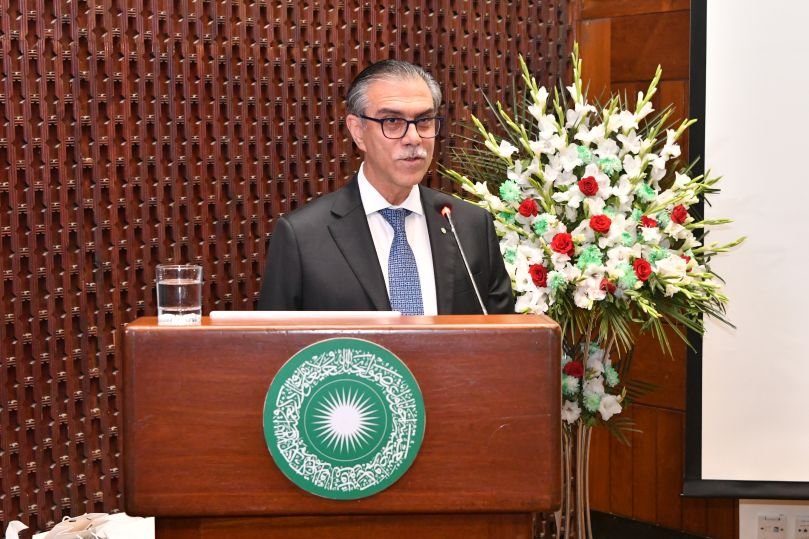
The inaugural session featured Chief Guest His Excellency Tariq Khan, High Commissioner of Canada to Pakistan. “Canada is helping countries like Pakistan confront climate-driven vulnerabilities,” he noted. “The ideas shared at this conference can help shape a more sustainable future for millions of people.”
Joining virtually, Federal Minister for Planning, Development and Special Initiatives Professor Ahsan Iqbal emphasized the national imperative for climate adaptation. “Pakistan’s future will depend on how boldly we reimagine our cities, homes and public institutions in the face of climate change. Building resilience is not optional — it is a national development priority,” he said. “Conferences like this help translate research into policies that make environments safer, more inclusive and climate-adaptive.”
Keynote presentations by Professor Sajida Haider Vandal (THAAP), Christopher Burman and Joseph Augustine (UCL), and Dr Zahra Hussain (Laajverd) highlighted climate-smart architecture, indigenous design solutions and community-led adaptation models.
Addressing the gathering, AKU President Dr Sulaiman Shahabuddin reiterated the University’s long-term commitment to climate adaptation. “Climate change is reshaping every aspect of life in Pakistan. Our responsibility as a university is to help the country design smarter, safer, more resilient environments,” he said. “AKU is committed to generating evidence, solutions and partnerships that support adaptation at scale.”
The inaugural session concluded with reflections that set the direction for the rest of the conference, which will explore rural adaptation, climate-resilient health systems, indigenous knowledge, community innovations and a high-level national policy dialogue.