Cummins reaps rewards from 50-year partnership with China
By Zhou Zhou, Yu Jinghao, People’s Daily
American manufacturer Cummins has cultivated a remarkable half-century partnership with China, evolving from initial technology transfers to establishing joint ventures and now leveraging China-based R&D centers to serve global markets.
Over decades of development, Cummins has evolved from a diesel engine manufacturer into a diversified power solutions provider covering engines, generator sets, hydrogen energy and other fields.
Nathan Stoner, vice president of Cummins and chairman of Cummins China, notes that Cummins’ development in China has been a story of learning and growing together with the Chinese market.
The company’s connection with China dates back to World War II, when China and the United States fought side by side against Japanese fascism. In 1941, when the United States provided wartime aid to China, the supplies included river patrol boats and military trucks equipped with Cummins engines.
Shortly before the victory in the Chinese People’s War of Resistance Against Japanese Aggression, a company based in Chongqing in southwest China reached out to Cummins to seek opportunities for cooperation.
Irwin Miller, then general manager of Cummins Engine Company, replied with strong interest in collaboration. Miller’s 1975 visit as company chairman made Cummins among the earliest U.S. firms pursuing Chinese commercial opportunities.
China’s accelerating industrialization created urgent demand for high-power, reliable equipment, while economic reforms provided fertile ground for Cummins’ expansion.
In 1981, Cummins began engine production in Chongqing through a licensing arrangement. In 1986, Cummins signed a licensing cooperation agreement with China’s Second Automobile Works, renamed Dongfeng Motor Group in 1992. In 1996, the two sides established Dongfeng Cummins Engine Co., Ltd. in Xiangyang, central China’s Hubei province, with each side holding a 50 percent stake, demonstrating their shared commitment to equal and mutually beneficial cooperation.
As the partnership deepened, cooperation between Dongfeng and Cummins evolved from simply supplying engines to collaborating across the entire powertrain system. Yang Qing, chairman of Dongfeng Motor Group, said the cooperation between the two companies has been “a process of mutual achievement.”
“Cummins’ cutting-edge power technologies and reliable quality have perfectly complemented Dongfeng’s vehicle products, winning broad recognition among end users,” Yang said.
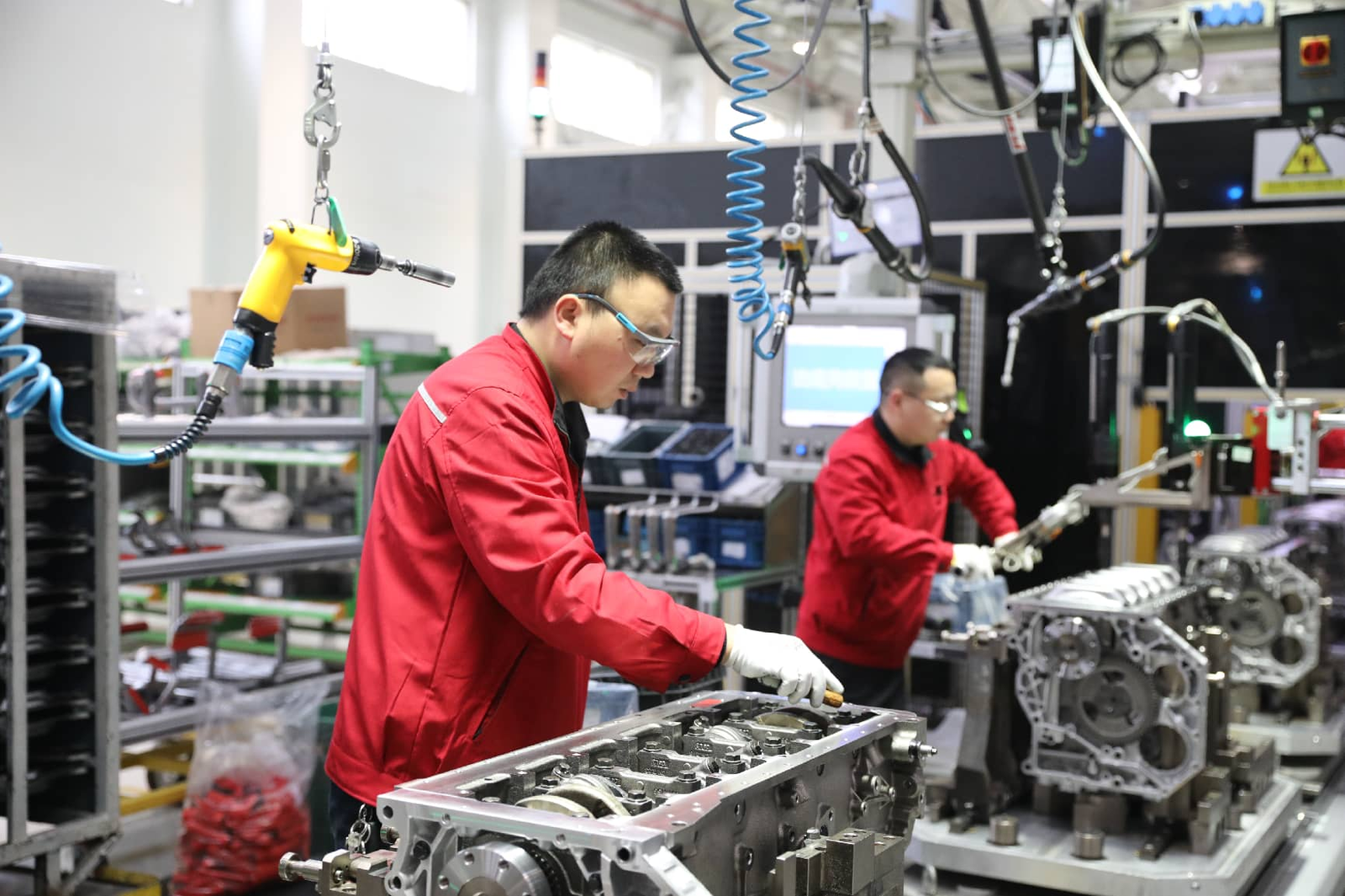
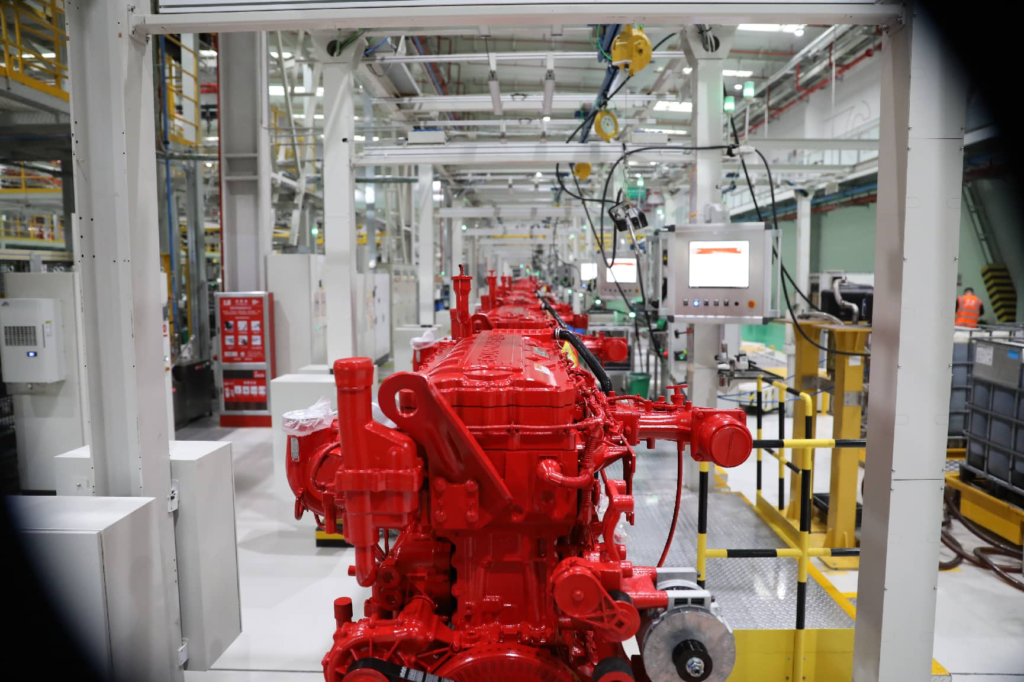
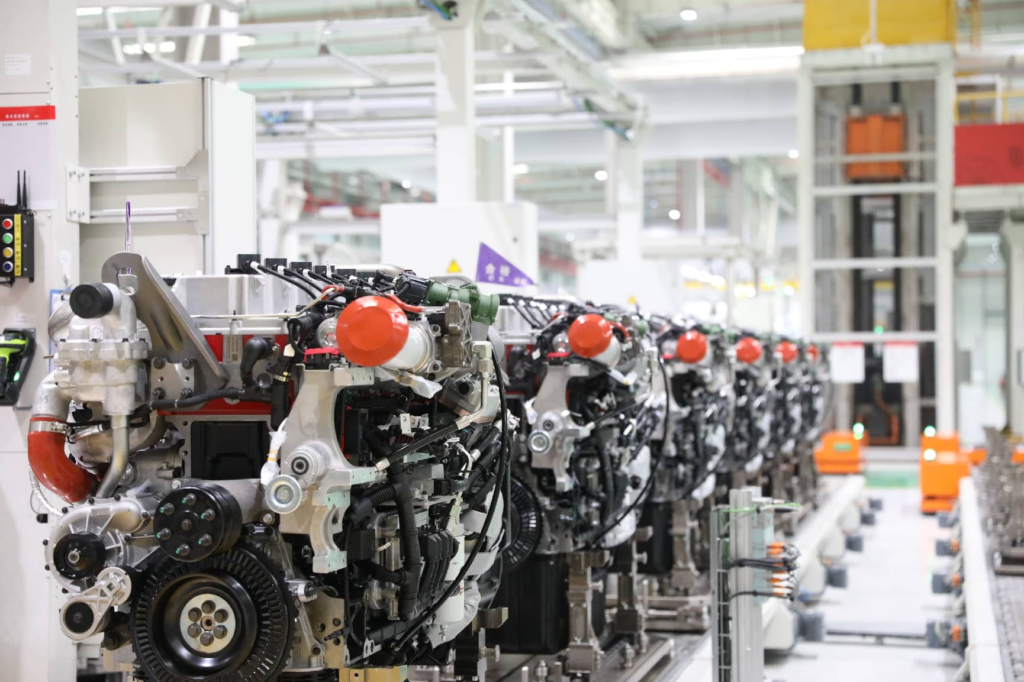
At Dongfeng Cummins’ heavy-duty engine factory in Xiangyang’s High-Tech Industry Development Zone, robotic arms maneuver engine blocks while AI-powered vision systems conduct millimeter-precision quality checks. This intelligent manufacturing hub features 28 automated workstations producing eight engine series simultaneously, achieving wastewater-free painting processes. Recognized as both national-level intelligent manufacturing and green factory, it rolls out a new “Legend” engine every few minutes.
When Cummins planned a new Chinese engine plant in 2021, Xiangyang officials promptly engaged. Investment teams worked overnight preparing materials to demonstrate the region’s industrial strengths. Cummins vice president Wang Kaijun recalled: “The sincerity and practical policies, professional team, mature supply chain, and government support were decisive.”
(Photos provided by Cummins China)
The project was ultimately located in Xiangyang. The agreement was signed in November 2021, with construction permits obtained the same month. On May 30, 2023, the new factory officially began operations, producing its first “Legend” engine right away.
To date, Dongfeng Cummins has produced over 4.2 million engines spanning 2.5L to 16L diesel and natural gas models while pioneering hydrogen fuel technologies. The jointly developed ISZ13 engine, featuring fully independent intellectual property rights, has become a benchmark in China’s premium engine market.
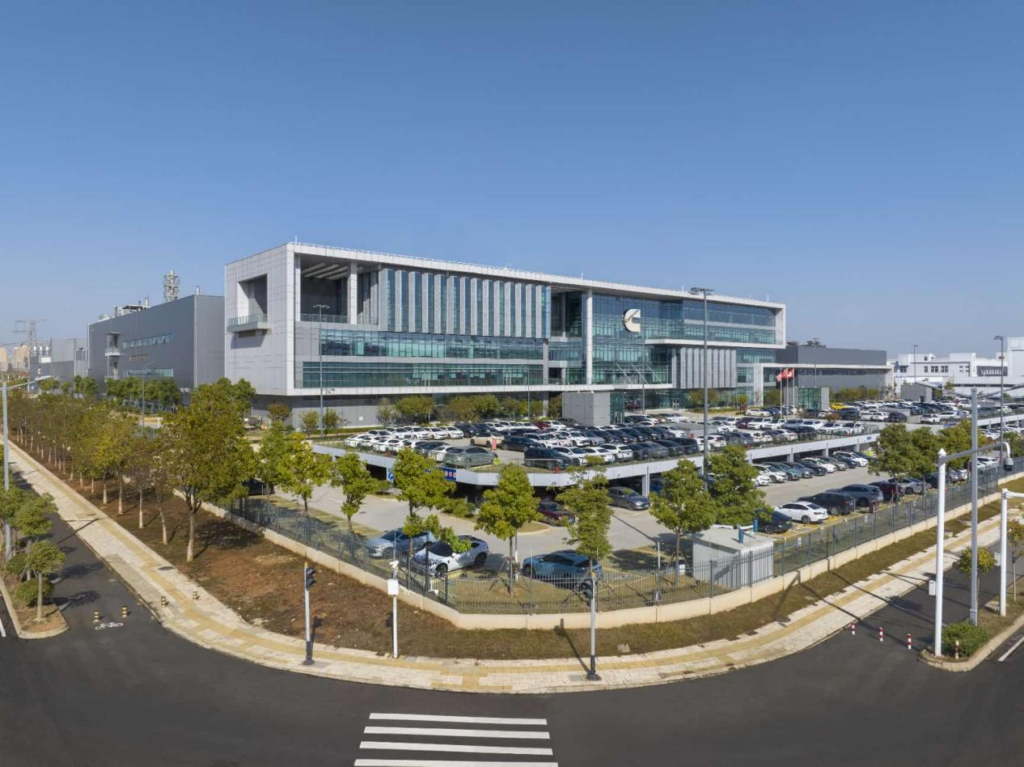
At the Cummins East Asia R&D Center in Wuhan Economic and Technological Development Zone in Wuhan, capital of Hubei province, Chinese engineers were coordinating remotely with technical teams in the United States, the United Kingdom and India, advancing a next-generation heavy-duty power platform set to enter real-world testing.
One core control module of the platform was independently developed by the Wuhan team. Outside the meeting room, the nearly 500-member technical team consists entirely of local Chinese engineers, with an average age of under 40.
Shi Lei, general manager of the R&D center, said Wuhan’s mature automotive industrial chain and strong pool of educational and scientific talent were key reasons the center chose the city.
“Powered by AI technologies, the design and development cycle for traditional components such as bearings has been significantly shortened,” Shi said. “Our innovations no longer serve only the Chinese market — they directly support Cummins’ global product lineup. As Cummins’ largest technology center outside the United States, this has long become a source of innovation for the company worldwide.”
In 2025, overseas product development projects accounted for more than 20 percent of the center’s total R&D workload.
Since 2022, Cummins has invested nearly 7 billion yuan (about $1.03 billion) in China to build more advanced R&D and manufacturing facilities.
“Many people ask us why we continue increasing investment in China,” Stoner said. “The answer is straightforward: China boasts not only a huge market of more than 1.4 billion people, but also tens of millions of hardworking engineers, efficient government services, complete industrial chains, and deep respect for innovation. Here in China, ideas can be rapidly turned into real-world products and solutions.”
“The story of Cummins in China is also, in many ways, a reflection of the story between the United States and China,” he added. “When we cooperate as partners, we can absolutely achieve success and shared prosperity together.”